TRAVELS with a difference. Nizar Harji.
contact: nizarharji@shaw.ca nizarharji.travel.blog
Passion to explore far and wide to experience and understand the creation with all its
diversity has been a learning process. The emphasis is on the people of different lands,
their culture, history, geography , economics and life. This is about one of the many journeys that I undertook to over 60 countries.
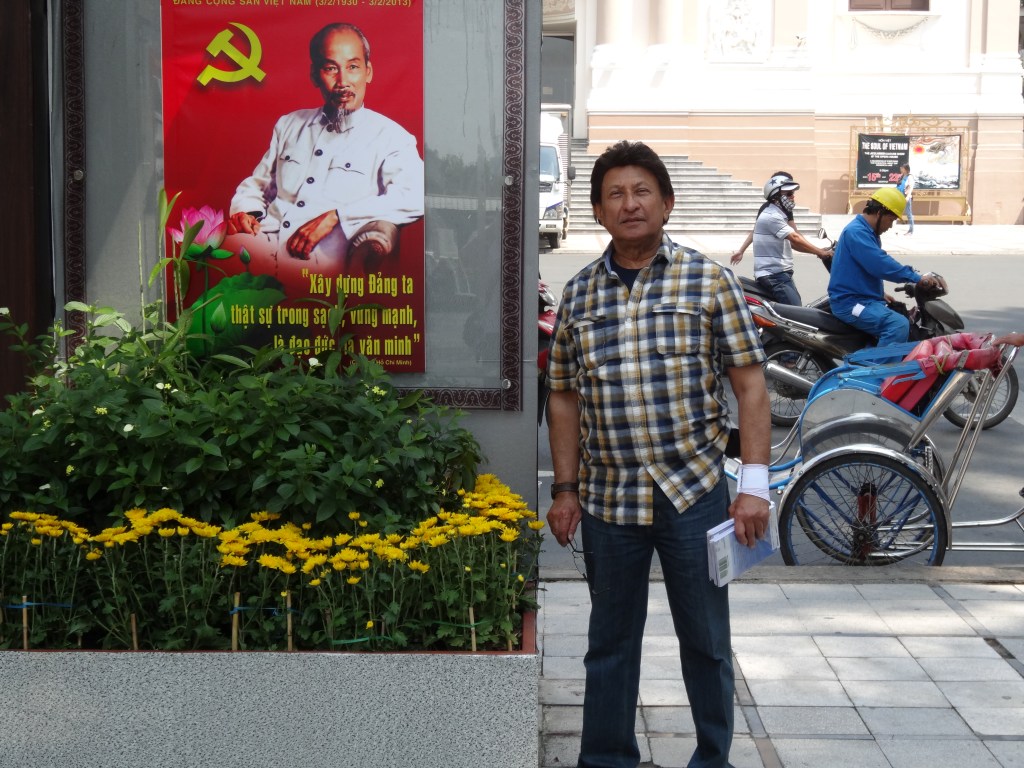
The center of the city Saigon (now HO CHIN MIN) – VIETNAM.
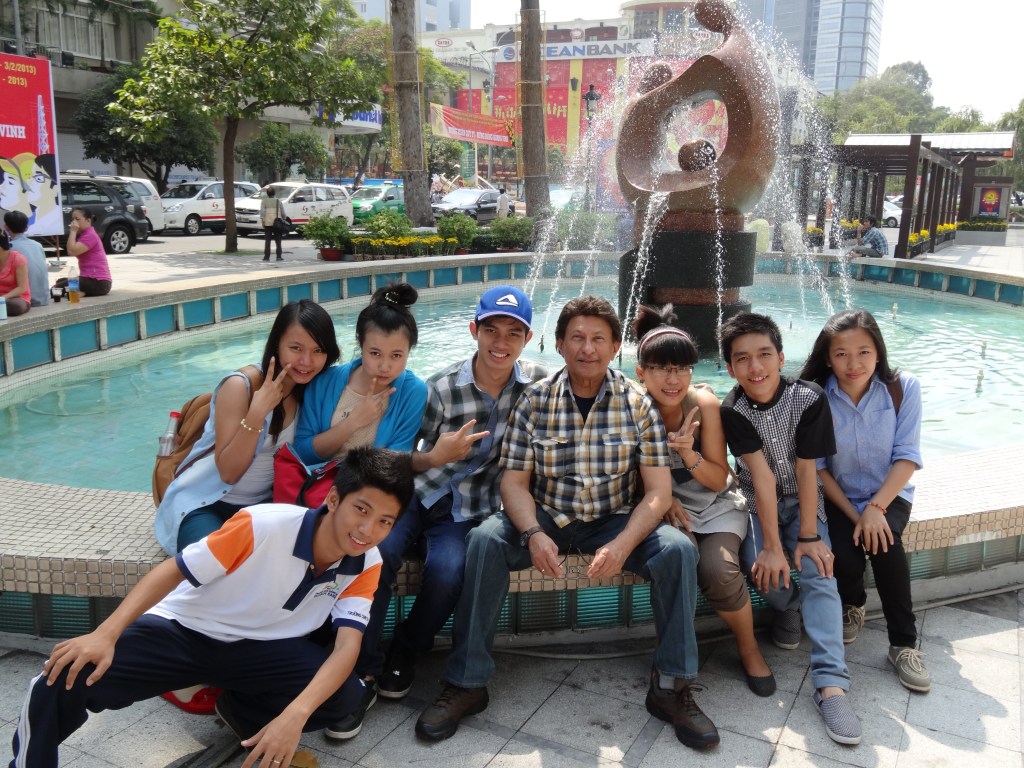
With new generation of Vietnam. Vietnam has a total population of 95 million is a most densely populated country in South East Asia, two thirds of the population is under the age of 35. It shares borders with Cambodia, Laos and China. The country went through a most brutal war with U.S. from 1955 to 1975. The amount of fire power that was unleashed by U.S. on this small country during that period was twice the aerial bombing that was released on Germany in the Second World War. Millions of lives in this small country were lost, economy shattered with wide spread vast destruction. With relentless bombing of their main agricultural livelihood and the country side left the rural population devastated. After the ignominious defeat of U.S. forces in 1975 and about 50,000 U.S. soldiers dead and mounting pressure from the civil society of U.S. to get out of Vietnam, the war came to an end. However the trade embargo by U.S. stayed until 1994 when it was lifted and with that the war came to an official end and the reconstruction of the economy started with normalisation of relation with U.S. The diplomatic ties were restored in 1995 and today the U.S. has become Vietnam’s largest export market. Vietnamese people have no animosity towards U.S. for atrocities that was unleashed against them. With young and educated population and hardworking, it is now experiencing astounding economic growth.
Mekong River which flows through China, Myanmar, Laos, Thailand, Cambodia and Vietnam has great impact on the Vietnamese people for water and for irrigation of the crops. It also serves as a significant transport channel, they also hold their floating markets on the river. Almost 60 million people live in the Mekong River basin. Mekong Delta came under relentless severe U.S. bombing during the brutal war from 1955 to 1975.
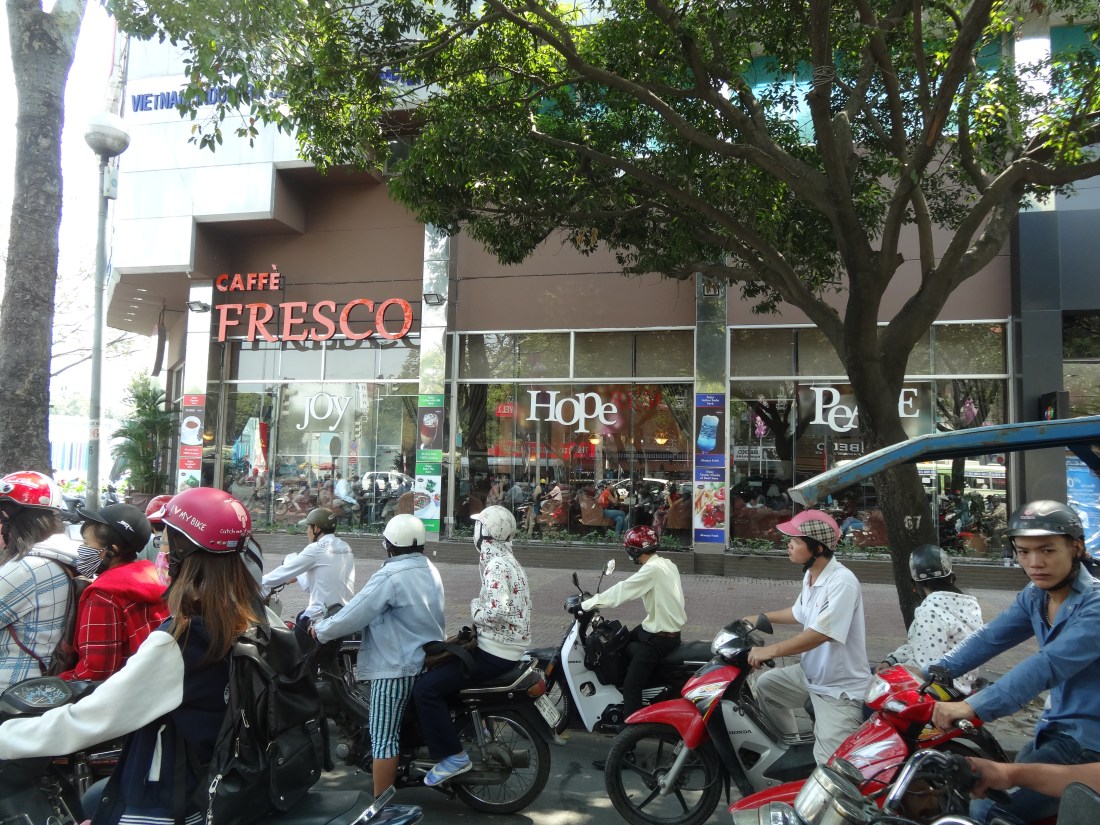
Busy road at the city centre Saigon. Thousands of motor bikes on the road. This is the main transport system in the city, well managed. Majority of the population are young.
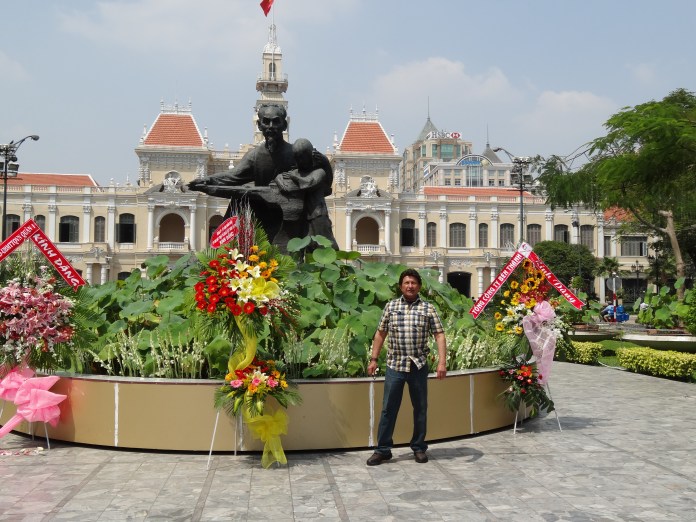
At the statue of Ho Chin Min in the city center boulevard.
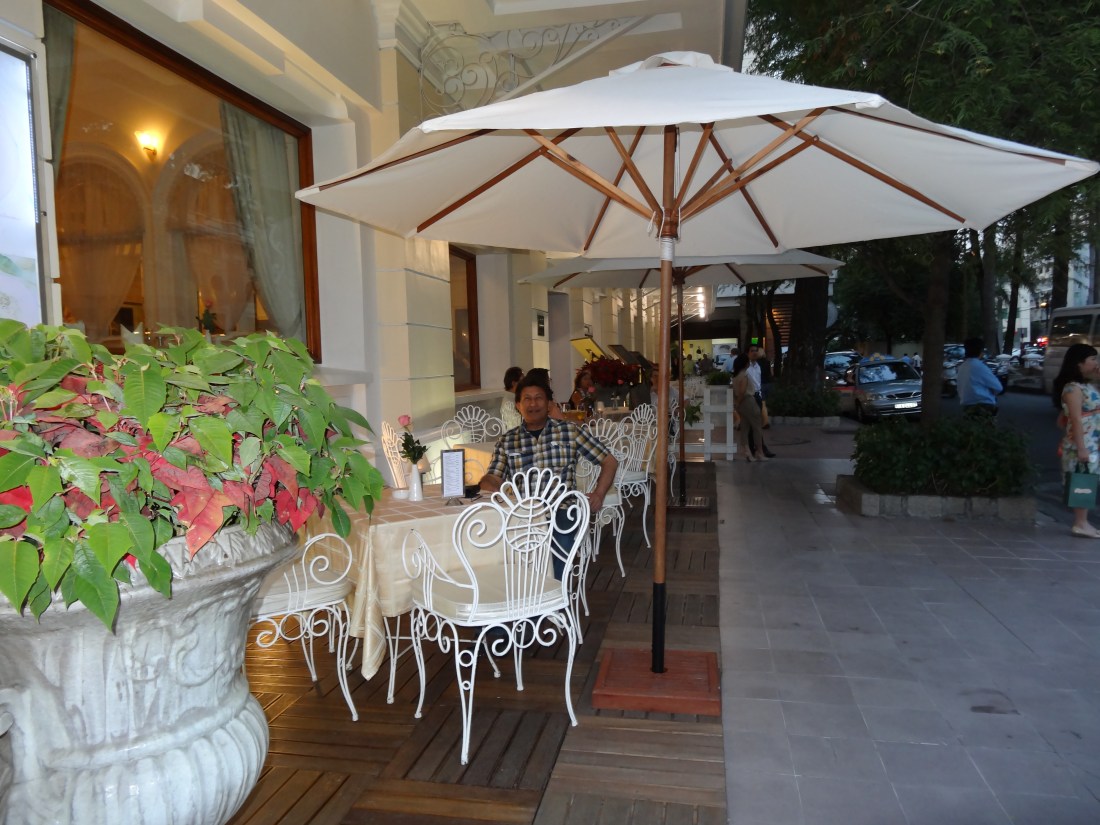
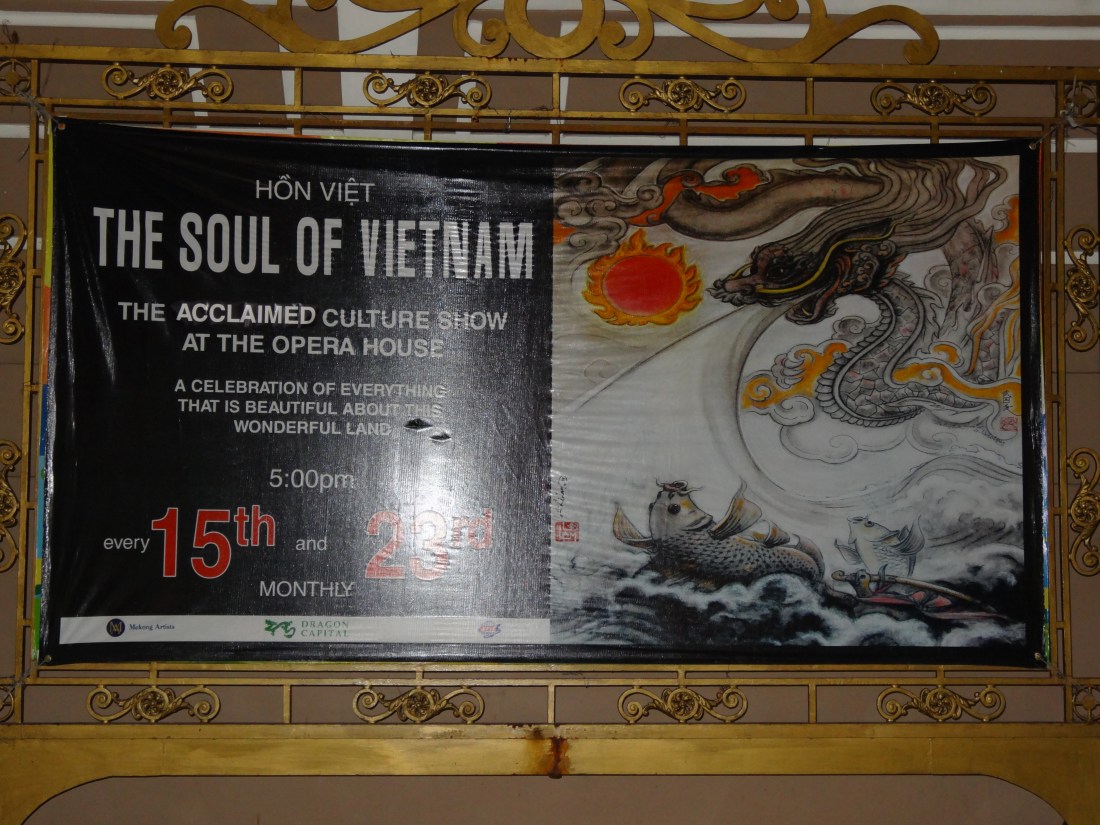
Before the U.S, invasion of the country, France had occupied Vietnam (1893 – 1954) and governed it as a Colony until their defeat and withdrawal. It is the French culture that is most visible to-day. There are stately French built mansions, flower and tree shaded boulevards, French style road side cafes as pictured above serving French bread , art galleries, operas (as below) . The origin of some customs are still French and prevailing.
Also unique is the Vietnamese cuisine.
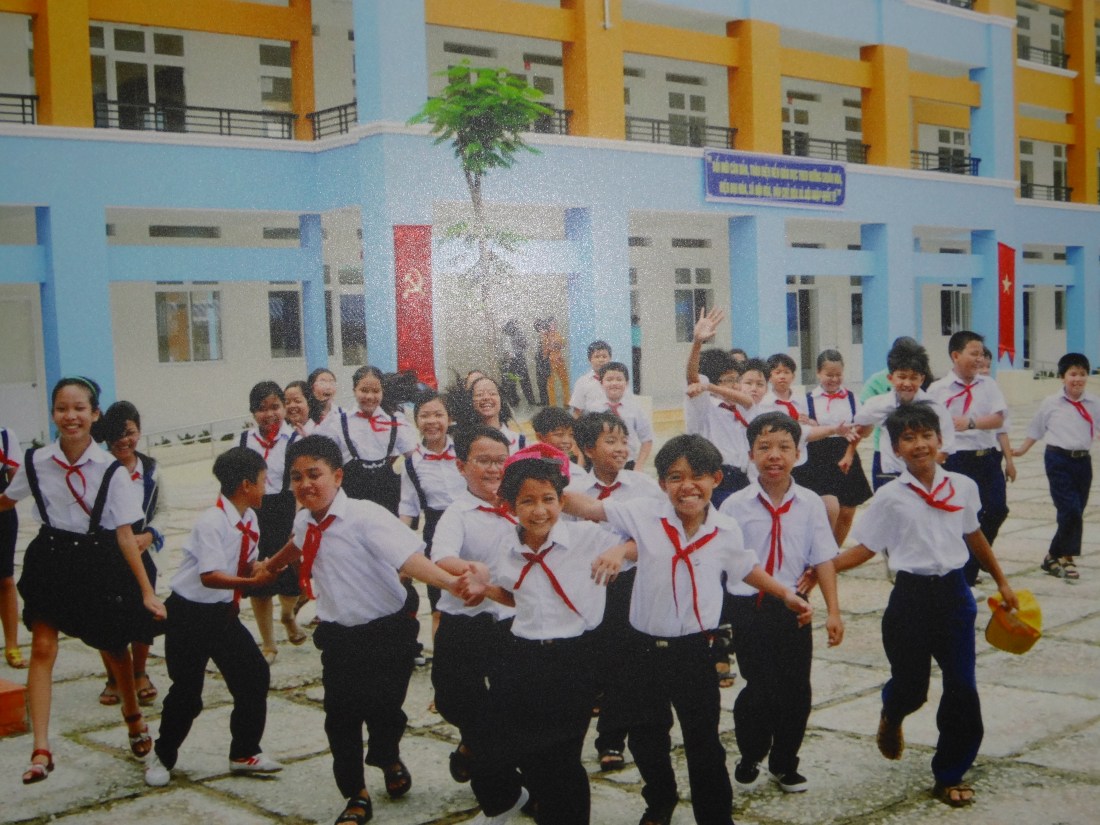
The up and coming generation that had not seen the war but are taught the war history in the school.
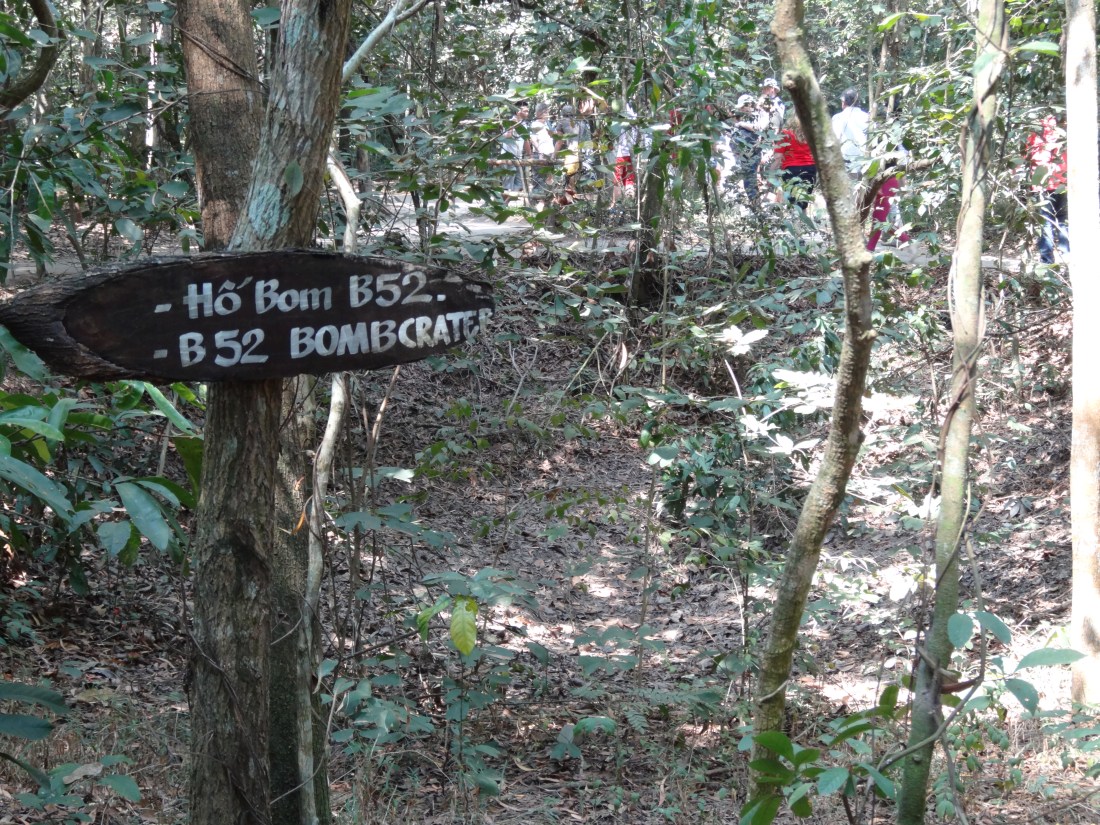
The heavy bombing with B52 bombers on the country, has been preserved for historical purposes. The fragments of downed B52 bomber and captured weaponry is preserved in the Army museum in Hanoi and Saigon.
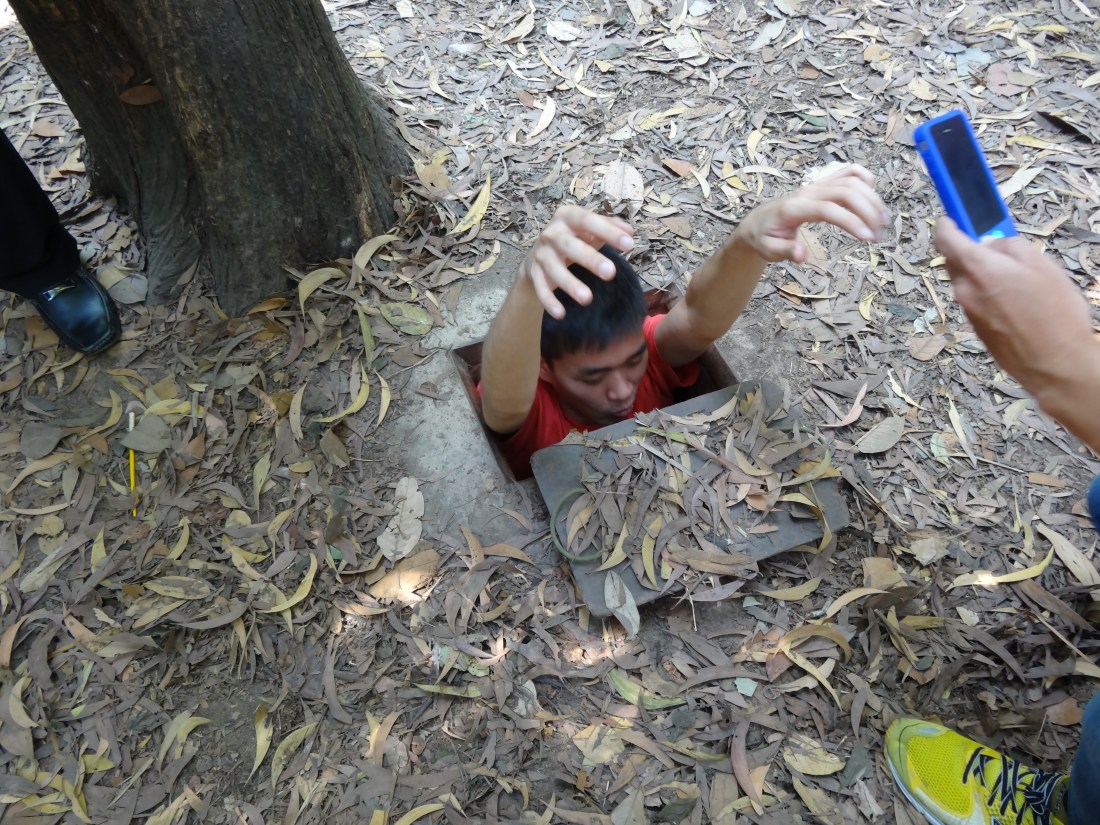
The regular Vietnamese Army was no match to U.S. firepower and their war resistance was conducted by Guerilla warfare in the jungles and the countryside of the country. It was mostly the civil population that were engaged in Guerilla war tactics and who took most of the brunt. As above such tactical tunnels at Cu-Chi and Vinh Moc through out the countryside enabled the guerilla fighters to continue the struggle to face the enemy.
I was fortunate to meet veteran guerilla fighters and spend time listening to their war experience through an interpreter who was with me. Among them were ladies now aged who took part in the struggle. Their story was most revealing when I enquired how did the young women got involved in the guerilla force. They revealed painfully the memories that the women had suffered the most in the countryside molested sexually by the U.S. ground forces in hundreds of thousands of them. Their homes and agriculture and villages were burned down, their elders and children killed .They could take no more and then that they came forward to volunteer in guerilla war. Initially this was rejected by the Communist Military High Command as against Asiatic culture but in the end they prevailed and were given basic training in Pistols and Grenades and the survival and detection tactics in the tunnels.
It is now widely acknowledged that the war was really won by these determined fearless
women who were burning for revenge to what was done to them. With their slim bodies they could skid into the tunnels and come out in the darkness of the night to cause heavy casualty to the U.S. forces and their weapons. They explained that they would get the air to breathe when under the tunnel by pushing out a hollow bamboo pole from the tunnel up to the open without being detected. They carried their food to the tunnel. The rest one can only imagine how these brave women survived.
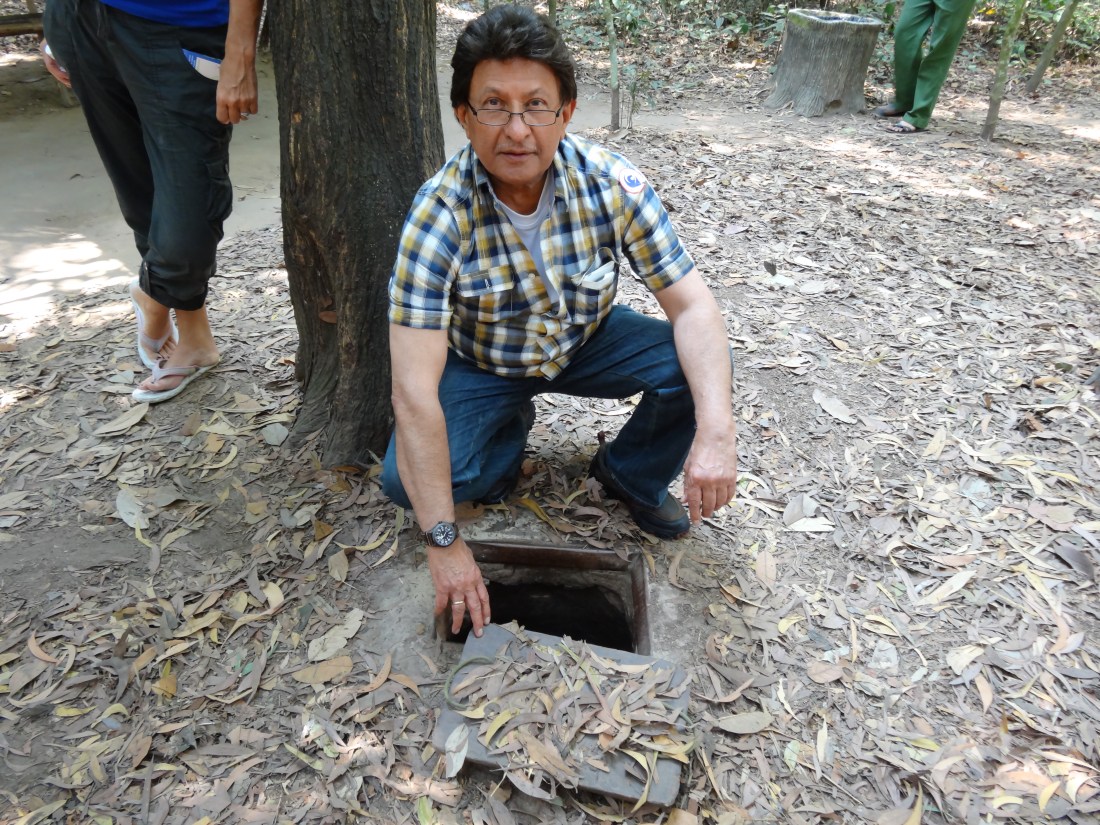
At the CU CHI tunnel.
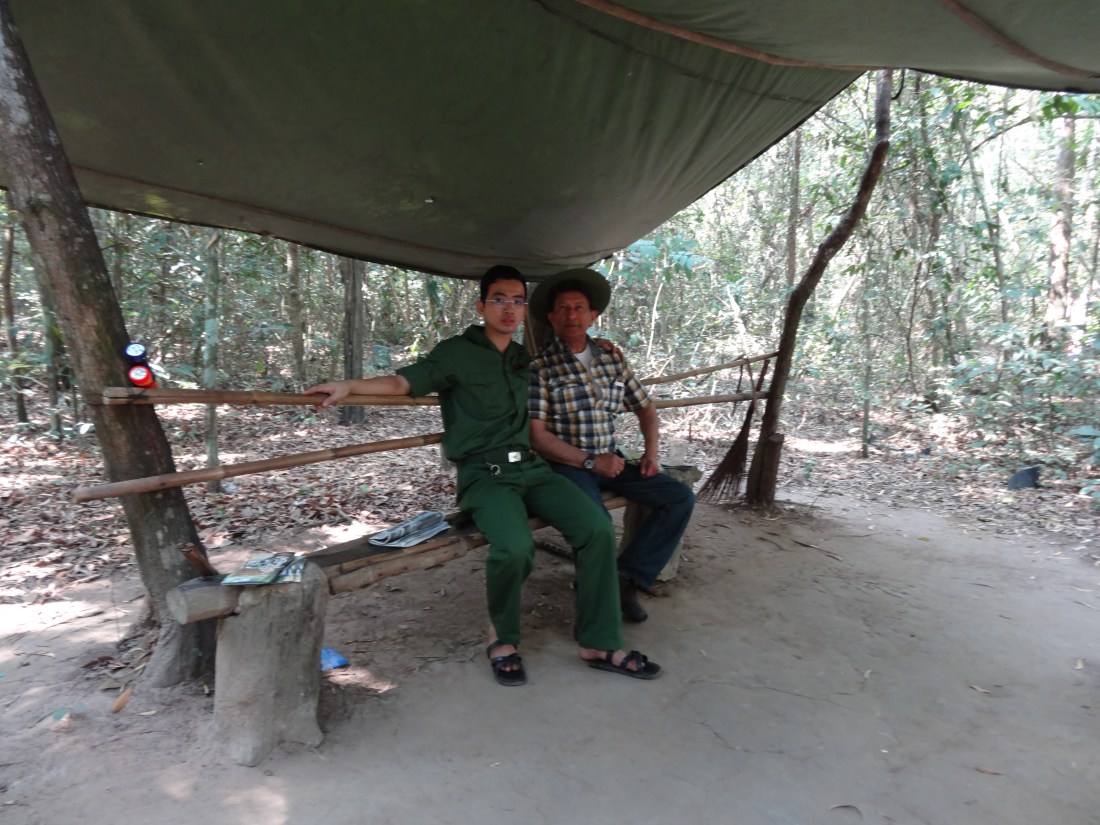
With Vietnamese guard protecting the relics of the war.
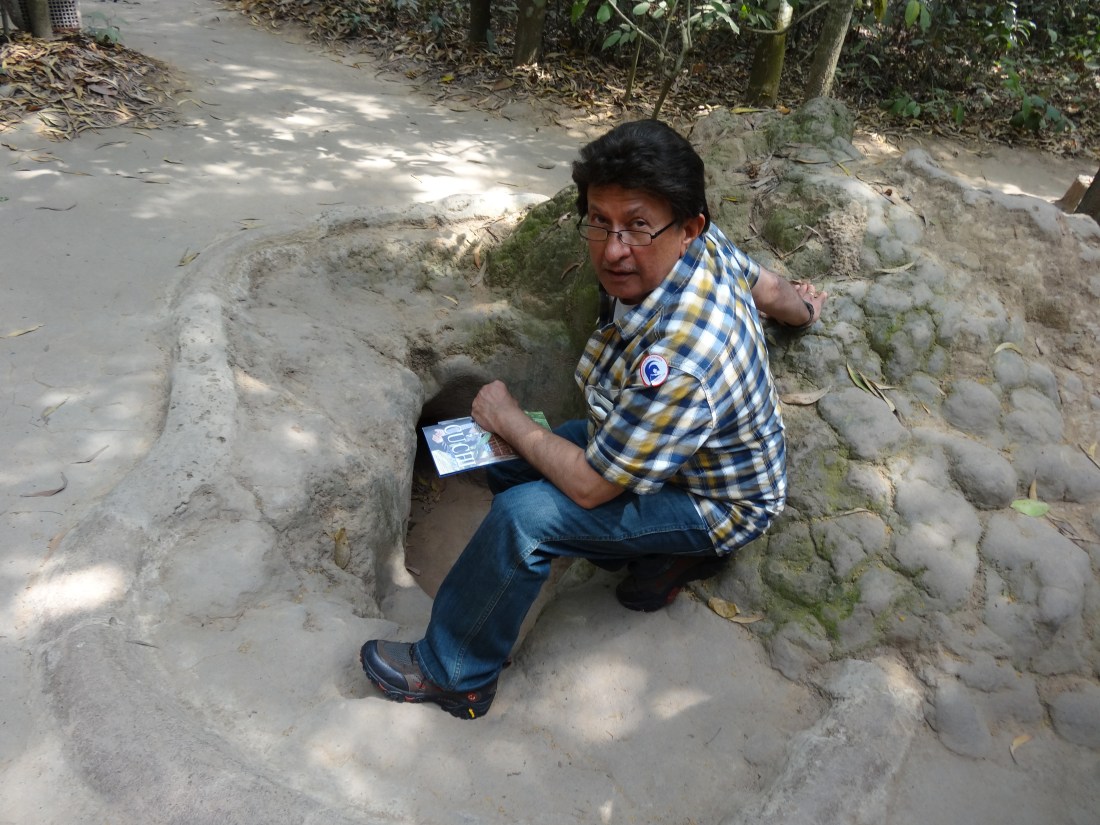
Above at the entrance of the extended tunnels created by the guerillas in the jungle and countryside to move their ammunition, rations, medicines and to convey directives of their High Command. An extra ordinary resilient spirit one can only imagine.
ALL PHOTOS ARE COPYRIGHT.

 Travels Nizar Harji